
Just How Many Types of Biological Safety Cabinets Are there?
Amanda2026-08-27T13:06:11+00:00Biological Safety Cabinet Classes
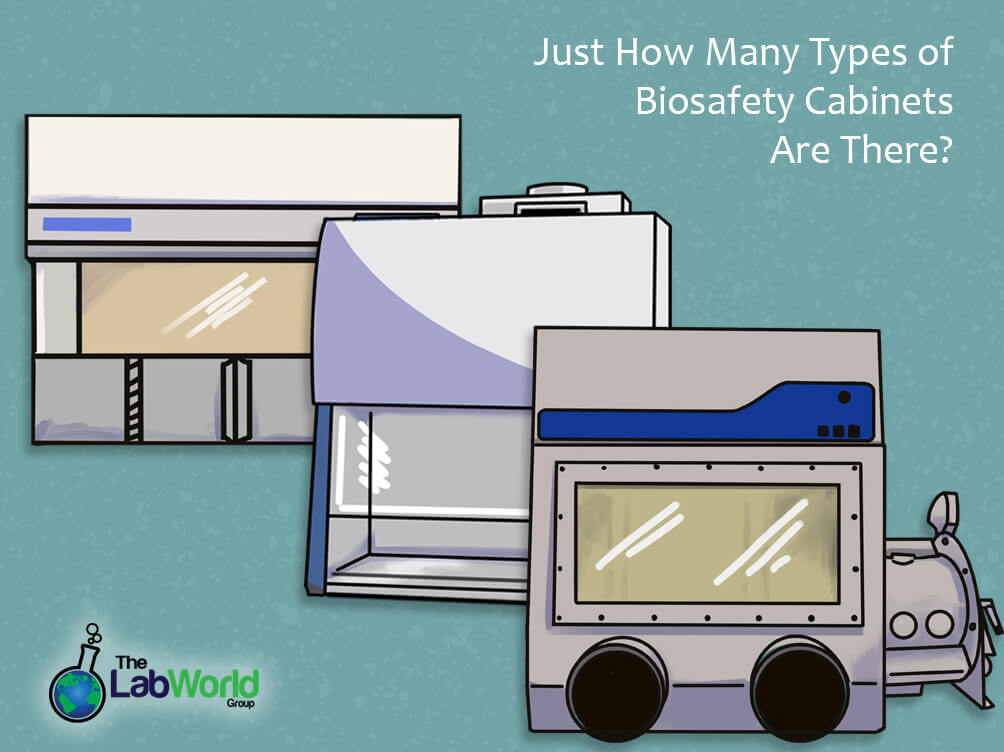
Biosafety cabinets, as we touched on before, are broken down by classes. There are three main categories tied to biocontainment levels, each with steadily increasing degrees of containment and protection for the user, environment, and/or product. Here we’ll take an in-depth look at each, starting with Class I.
Class I Biological Safety Cabinets
Class I is the base level, offering the lowest level of protection using ventilated but uncirculated airflow. While these cabinets are built to protect the user and environment, they offer no protection for the product to prevent contamination, as airflow is drawn in from the room unfiltered. These cabinets are similar to a fume hood but have the required HEPA filtration.
These BSCs are best used to enclose equipment like a centrifuge or shaker, or protocols where cultures might generate an aerosol, whisking particles away from the user and into the HEPA filter. Whether a Class I is ducted or not, the air is sterilized before reentering the environment. As a result, they should be used only with low- to medium-risk biological agents rated at biosafety levels 1, 2, or 3.
Class II Biosafety Cabinets
At the Class II level, we start to see protections not only for the user but for the product as well, expanding to include sterile pharmacy compounding. This class is further broken down into A1, A2, B1, B2, and C1 categories. A class II cabinet will have inward airflow to protect the user, downward filtered airflow to protect the sample, and HEPA-filtered exhaust to protect the environment when exiting.
Biosafety Cabinet Types
An A1 cabinet has a minimum velocity of 75 fpm for air entering through the sash opening; it may or may not be ducted and is suited only for working with biological agents free of volatile toxic chemicals and volatile radionuclides, not for compounding hazardous pharmacy samples. Type A cabinets recirculate air back into the work area, using positive pressure to draw it through filters before flowing over the work area.
A Type A2, like the A1, will filter HEPA air with or without ducting; however, it has a slightly higher inflow velocity of 100 FPM, so it can permit trace quantities of hazardous chemicals.
Type B also has two levels; B1 requires an inflow of 100 FPM and is similar to A2 in many ways. A B1 cabinet, however, can also handle small traces of toxic chemicals and radionuclides, in addition to microbiology applications, when work is done in the rear of the work area where the air is directly exhausted.
A B2 is sometimes referred to as a total exhaust cabinet, and as the name would imply, does not recirculate any of the air in the system. Intake air is filtered before entering the work area in a downward flow, then filtered again and directly exhausted. Because the air is used only once, there is less chance of particulates coming through and can therefore be used with biological agents containing hazardous chemicals and radionuclides.
Type C1 is last in the line, requiring 105 fpm inflow through the sash, but with the flexibility to operate as either an A or B type cabinet. A true chameleon, Type C can be set up to either recirculate like Type A or exhaust like Type B, simply by connecting or disconnecting the exhaust. When a change occurs, recertification is required. This BSC also features marked work and storage areas and is designed for direct exhaust for hazardous vapors and radionuclides. While Type C is the most flexible, that flexibility generally costs more.
Class III Biosafety Cabinets
A Class III Biosafety Cabinet offers the most protection and is cleared for use with biosafety hazards requiring 1, 2, 3, or 4. These features include completely enclosed work areas with a transfer chamber, leak-tight construction, and gloves for accessing the work area. Sometimes called glove boxes, these BSCs use negative pressure within the cabinet and an HEPA-filtered air supply. When air is exhausted, it either passes through double HEPA filtration or a HEPA filter and incineration.
Final Thoughts
As you can see, the cabinet you need is dictated entirely by the biosafety level your work requires. Once you know that, selecting the best fit should be easier. Do you need ducting or recirculation, or does the flexibility of a Class II Type C sound like a good fit for your lab? In our next article, we’ll discuss Biosafety Cabinet Manufacturers and what else you’ll need to consider when selecting a Biological Safety Cabinet for your lab.