
Incubator Shaker Guide
joe2026-08-27T13:32:49+00:00Laboratory applications, such as cell culture and tissue samples, benefit from the versatility of incubator shakers, which can perform incubation and shaking simultaneously. Because they combine incubation and shaking, incubator shakers can be very helpful and may save you money by eliminating the need to purchase a separate incubator and shaker. They also remove the need to manage an incubator and a shaker independently, saving time during processing. Many different models are available, each with a unique set of characteristics suitable for various laboratories and applications. Understanding what an incubator shaker is, how it works, and which brands are best will help you find more information and gain insight in the lab.
What is an Incubator Shaker, and how does it work?
In biological instruments, an incubator shaker performs both incubation and shaking simultaneously, with the user controlling the temperature. This device is ideal for cell culture, fermentation, hybridization, biochemistry, enzyme and cell tissue research, and other applications that require both temperature control and shaking. It can be used to grow microbial cells and strains of various organisms. They can also be used to stimulate cell development by distributing nutrients and infusing oxygen into a cell culture, which helps cells grow faster. Shaking incubators may be used for several purposes, including cell aeration, solubility research, and cell culture. Shaking incubators combine the capabilities of a traditional incubator with those of a laboratory shaker to provide high efficiency in a wide range of applications.
When incubator shakers were first developed in the 1960s, they were used to screen various kinds of antibiotics and for other bacterial applications. By the 1970s, they enabled the growth of microorganisms under specific environmental conditions. Incubator shakers are still utilized in these applications today. They are also widely used in laboratories that conduct cell culture research. Consequently, because antibiotic manufacturing and administration require both heating and shaking, incubator shakers have become ideal and indispensable equipment in almost all labs today.
Incubator Shaker Properties
Incubator shakers are used for both incubation and shaking of samples. Typical applications include cell culture, fermentation, hybridization, biochemistry, enzyme research, and cell and tissue research. Different incubator shakers have different temperature characteristics. Some can cool and heat, while others can only raise the temperature above ambient. Some have extreme temperature ranges that can reach up to 80°C or more, while others can only achieve 40°C or less. Most incubator shakers with refrigerating capabilities can operate at set points as low as 4°C or 20°C below ambient room temperature. Some even have CO2 capabilities that add CO2 gas into the chamber for specific cell and bacterial growth applications.
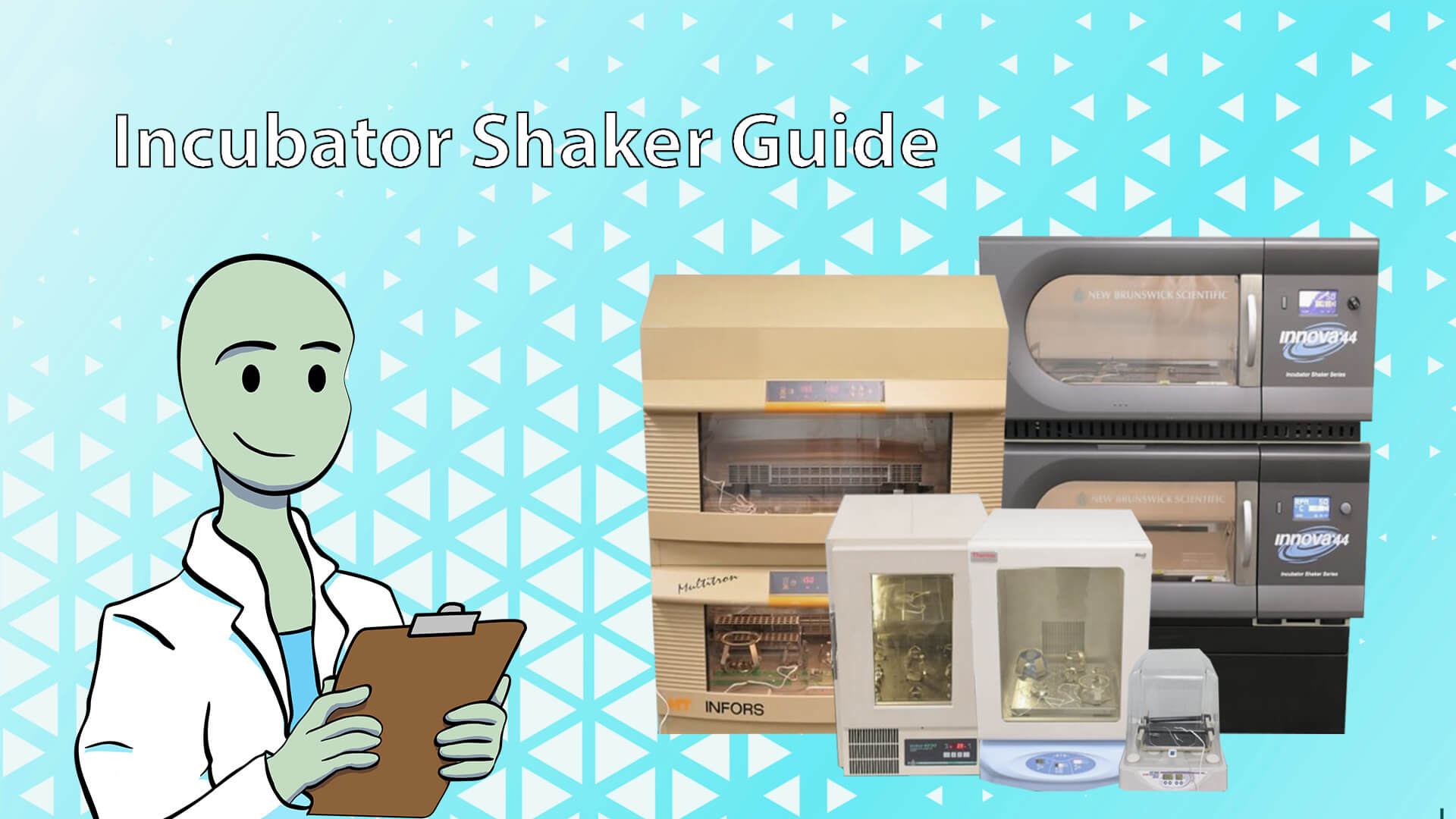
Incubator shakers come in various shapes and sizes, including benchtop, medium-sized, and floor models. A benchtop incubator shaker, such as the Thermo Max-Q 4450, can be placed directly on top of a table or countertop. These shakers are ideal for labs that need to perform simple applications and use smaller sample volumes. A medium-sized incubator, like this Orbital model, is somewhat bigger than a small incubator and, depending on the size, may be placed on a solid counter and sometimes has refrigeration for a broader range of control. Finally, a floor model is installed on the floor and can process a greater volume of material. Some floor models, such as Infors and Innova types, can be stacked on top of each other. The size of the incubator shaker is directly correlated with the size of the orbit. As the device gets smaller, the orbit decreases, and vice versa. Benchtop incubator shakers have orbit sizes of 3 mm and 19 mm, respectively. Incubator shakers in the medium and floor model sizes feature orbit diameters of 25 mm or 50 mm, respectively.
The most common accessory includes sticky mats along with other items like flasks and specialized holders, which may be customized. This includes flask holders with capacities ranging from 100 mL to as much as 5000 mL. Medium and floor model incubator shakers can handle sample and fluidic sizes between 2000 mL and 5000 mL. Smaller flasks can fit in any size incubator shaker. Most versions can be easily customized by adding various specialized holders. Common holders include funnel clamps to small tube racks. Smaller incubator shakers are ideal for labs that need dedicated, specialized applications for tiny test tubes and flasks. A medium- or floor-model incubator shaker is required if a lab is using various-sized test tubes and flasks, especially larger flasks.
Incubator Shaker vs. Lab Shaker in an Incubator: Which is Better?
Many laboratories consider using a shaker inside an incubator rather than purchasing an incubator shaker. However, although heat- and humidity-resistant lab shakers may be used to do this, there are many advantages to utilizing a specialized incubator shaker instead. Incubator shakers have a longer lifespan, are built with higher-quality temperature-resistant materials, are available in various sizes, and offer the convenience of operating one system rather than two separate ones. For example, if laboratories place a shaker inside an incubator, they may encounter wiring and electrical difficulties, as well as compatibility issues with humidity and temperature, which can result in rapid wear and tear. In models that use CO2 gas, corrosion can occur on shakers within just a few months of minimal use and can seriously damage the shaker’s boards. In an incubator shaker, you can incubate without shaking and shake without incubating when processing samples. Furthermore, you won’t need to purchase an incubator and shaker separately, which would be more expensive. If you need to use both processes at the same time or separately, an incubator shaker will be more useful.
The Top Incubator Shaker Brands
Final Thoughts…
With this knowledge, you will be more successful in the lab if you have a fundamental understanding of what an incubator shaker is, how it works, and which brands are the best. For laboratory applications such as cell culture and tissue samples, the flexibility of an incubator shaker is helpful. Incubator shakers are handy because they combine incubation and shaking in a single unit. They also eliminate the need to manage an incubator and a shaker separately, which may save you time and money in the long term. Incubator shaker models come in several shapes and sizes, each with features that make it ideal for a wide range of labs and applications.
At The Lab World Group, we offer various incubator shakers, all with a 30-day warranty, and you can find them here. We’re professionals with over 20 years of combined expertise with laboratory products. We always go the extra mile to ensure our customers have a stress-free experience. We are fully transparent with our customers about the equipment and process. Our devices undergo extensive testing to ensure everything works correctly and meets manufacturer specifications. We guarantee excellent functioning lab equipment and outstanding customer service when you purchase from us.