
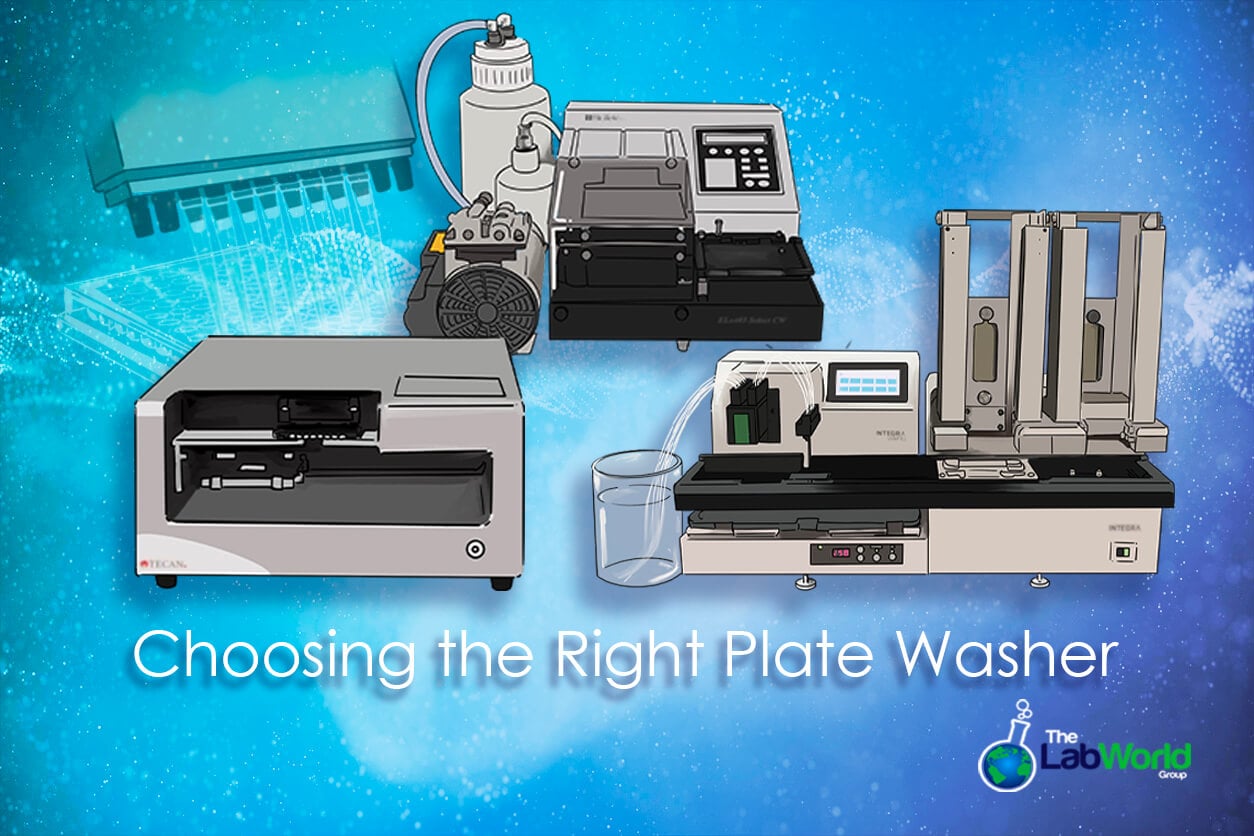
Choosing the Right Microplate Washer for Your Lab
Amanda2026-03-06T17:00:55+00:00Selecting a microplate washer is not simply a matter of choosing a model with the most features. The right instrument depends on how it will be used, the assays being run, and the laboratory’s workflow demands. A washer that performs well in a high-throughput ELISA lab may not be the best fit for cell-based assays or shared research environments.
This guide walks through the key factors laboratories should consider when choosing a microplate washer, helping ensure consistent performance, efficient workflows, and long-term value.
Understanding Your Application Requirements
The first step in choosing a microplate washer is understanding the assays it will support. ELISA and other immunoassays typically require thorough, repeatable washing to minimize background signal and improve sensitivity. These workflows benefit from programmable wash cycles, consistent aspiration, and reliable residual volume control.
Cell-based assays introduce different requirements. Washing must be gentle enough to avoid disturbing adherent cells while still removing unwanted media or reagents. Bead-based assays may require controlled flow rates to prevent bead loss. Identifying application needs early helps narrow the field of suitable instruments.
Throughput and Workflow Considerations
Throughput is a significant factor in selecting a microplate washer. Laboratories running a small number of plates per day may find that a basic or semi-automated washer meets their needs. At the same time, high-volume environments benefit from fully automated systems designed for continuous operation.
Workflow integration is also essential. Some labs require standalone washers, while others need instruments that can integrate with robotic handlers or automated screening systems. Choosing a washer that aligns with current and future workflow demands helps avoid bottlenecks as workloads grow.
Plate Formats and Compatibility
Not all microplate washers support the same plate formats. Standard configurations include 96- and 384-well plates, as well as strip plates for partial-plate assays.
It is crucial to verify that a washer is compatible with the plate types used in the lab, including flat-bottom or round-bottom wells. Incompatible formats can lead to poor aspiration, uneven washing, or assay variability. For labs running multiple assay types, flexibility in plate compatibility can be a significant advantage.
Wash Performance and Control Features
Wash performance is defined by how precisely a washer can dispense and aspirate liquid from each well. Key features include adjustable dispense and aspiration heights, programmable soak times, and the ability to control the number of wash cycles.
Advanced washers offer greater control over these parameters, allowing users to optimize protocols for specific assays. This level of control is particularly valuable for sensitive immunoassays and cell-based workflows where wash conditions directly affect results.
Ease of Use and Programming
In multi-user or shared laboratory environments, ease of use is a critical consideration. Intuitive interfaces and straightforward programming reduce training time and help ensure consistent operation across users.
Many modern microplate washers offer preset protocols that can be customized as needed. Transparent displays and simple controls minimize the risk of user error and improve the reproducibility of assay outcomes.
Maintenance, Reliability, and Serviceability
Beyond initial performance, long-term reliability is a key factor in washer selection. Instruments that are easy to clean and maintain are less likely to experience downtime due to clogs or mechanical issues.
Access to replacement parts and service support should also be considered. A well-supported washer can remain in service for many years, making reliability and serviceability essential components of the total cost of ownership.
New vs. Refurbished Microplate Washers
Budget considerations often influence equipment decisions. Refurbished microplate washers can be a cost-effective option when properly inspected, tested, and calibrated.
For many labs, refurbished instruments provide reliable performance at a lower upfront cost, particularly for routine assays. Evaluating warranty coverage and service options helps ensure confidence in refurbished equipment.
Common Mistakes to Avoid When Choosing a Plate Washer
One common mistake is selecting a washer that is more complex than necessary. While advanced features can be valuable, they may not benefit every workflow. Conversely, choosing an overly basic washer can limit flexibility as assay demands evolve.
Other pitfalls include overlooking plate compatibility, underestimating maintenance needs, or focusing solely on price rather than long-term performance and support. Careful evaluation helps avoid these issues.
Conclusion
Choosing the right microplate washer requires balancing application needs, throughput demands, and long-term reliability. By understanding how an instrument will be used and what features truly matter, laboratories can select a washer that supports consistent assay performance and efficient workflows.
A thoughtful approach to washer selection helps protect both data quality and equipment investment, ensuring reliable operation across a wide range of laboratory applications.