
The History of Microplate Washers
Amanda2026-03-06T15:12:04+00:00Microplate washers may seem like a routine part of modern laboratory workflows, but their development reflects broader shifts in laboratory science toward automation, standardization, and high-throughput experimentation. As assays became more complex and sample volumes increased, the need for reliable, repeatable washing methods grew alongside the rise of microplates.
Understanding the history of microplate washers provides context for why these instruments are designed the way they are today and why they remain essential in research, clinical, and diagnostic laboratories.
The Emergence of Microplates and Manual Washing
Before automated microplate washers existed, laboratory assays were performed in test tubes, on slides, and in early plate formats that required entirely manual handling. Washing steps were typically carried out using squeeze bottles, Pasteur pipettes, or early multichannel pipettes. While effective in small-scale experiments, these methods introduced variability and were difficult to standardize.
The introduction of microplates in the mid-20th century, particularly the 96-well plate, transformed laboratory workflows by enabling parallel processing of multiple samples. However, washing these plates manually was time-consuming and prone to inconsistency, especially as immunoassays and enzyme-based assays became more widespread.
The Rise of ELISA and the Need for Automation
The development and rapid adoption of enzyme-linked immunosorbent assays (ELISA) in the 1970s and 1980s created a pressing need for more consistent washing methods. ELISA workflows rely on repeated wash steps to remove unbound antibodies and enzymes, making wash quality a critical determinant of assay sensitivity and reproducibility.
As ELISA became a staple in research and clinical diagnostics, laboratories sought ways to reduce hands-on time and minimize user-dependent variability. Early automated plate washers emerged during this period, offering fundamental aspiration and dispense functions explicitly designed to support immunoassay workflows.
Early Automated Microplate Washers
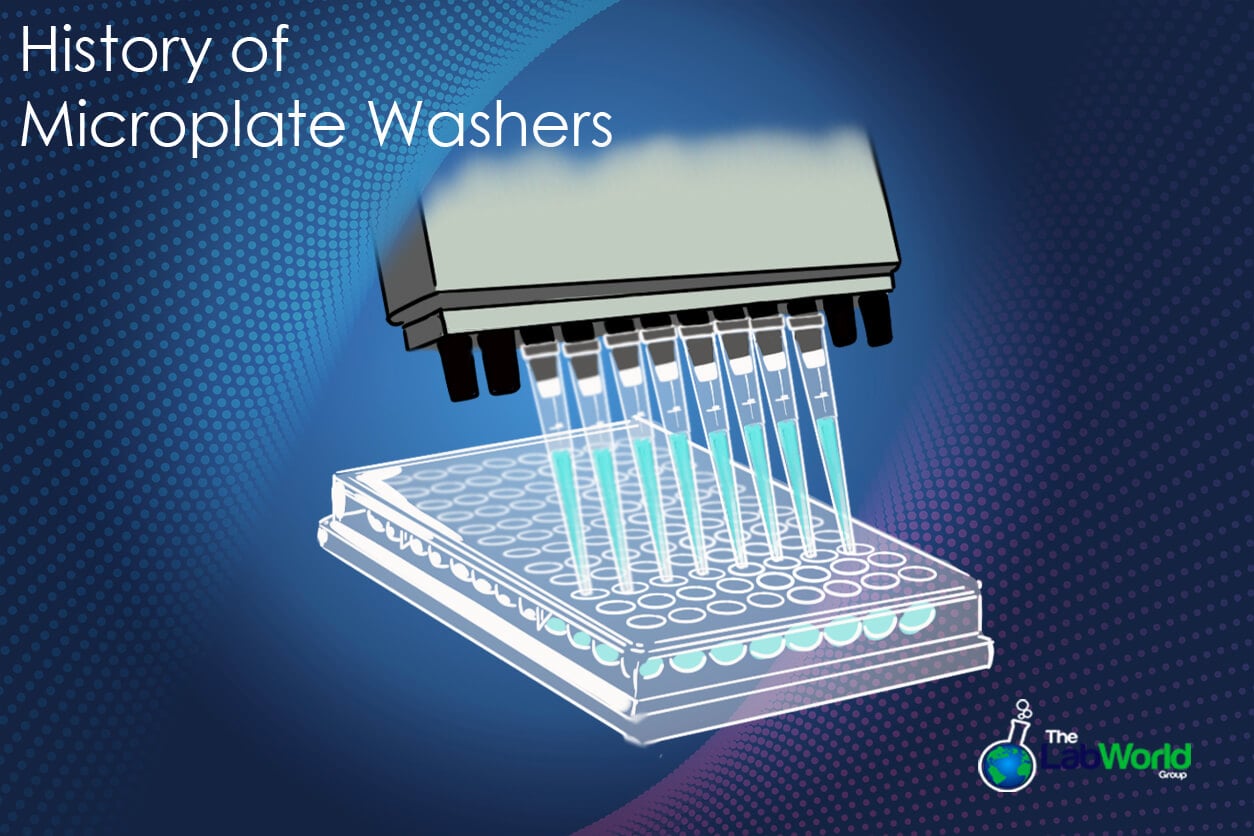
The first generation of microplate washers focused on simple, reliable fluid removal and replacement. These systems typically supported 96-well plates and offered limited programmability. Wash heads were designed to align with plate wells, aspirate liquid using vacuum systems, and dispense buffer from external reservoirs.
While primitive by today’s standards, these early instruments represented a significant improvement over manual washing. They allowed laboratories to process plates more quickly and consistently, paving the way for broader adoption of plate-based assays.
Advancements in Precision and Programmability
As assay complexity increased, microplate washers evolved to offer greater control over washing parameters. Adjustable aspiration heights, programmable wash cycles, soak times, and variable dispense volumes allowed users to fine-tune protocols for different applications.
These improvements significantly reduced background signal in sensitive immunoassays and enabled emerging applications such as cell-based and bead-based assays. By the late 1990s and early 2000s, microplate washers had become more user-friendly, with onboard software and digital interfaces replacing manual controls.
Expansion into High-Throughput and Automated Workflows
The growth of high-throughput screening in pharmaceutical and biotechnology research further shaped the design of microplate washers. Laboratories running hundreds or thousands of plates per day required instruments that could operate reliably for extended periods and integrate with robotic handling systems.
Manufacturers responded by developing washers compatible with automation platforms, faster cycle times, and enhanced durability. Support for additional plate formats, such as 384-well plates, expanded the role of microplate washers in large-scale screening and drug discovery.
Modern Microplate Washers
Today’s microplate washers are highly configurable instruments designed to support a wide range of laboratory applications. Modern systems offer advanced programming options, improved washhead designs, and features that minimize cross-contamination and residual volume.
Many washers now support multiple assay types within a single instrument, allowing labs to run ELISA, cell-based assays, and bead-based workflows without changing equipment. Ease of use, reliability, and serviceability remain central design priorities, reflecting the instrument’s role as a daily workhorse in many labs.
The Ongoing Role of Microplate Washers
Despite advances in assay chemistry and detection technologies, effective washing remains fundamental to many plate-based workflows. Microplate washers continue to play a critical role in ensuring data quality by providing consistent and reproducible washing across samples.
As laboratories continue to balance throughput, precision, and cost, microplate washers remain a clear example of how incremental innovation can have a lasting impact on scientific workflows.
Conclusion
The history of microplate washers mirrors the evolution of modern laboratory science. From manual washing methods to programmable, automation-ready instruments, these systems have adapted to meet the growing demands of plate-based assays.
By understanding the origins of microplate washers and how they have evolved, laboratories can better appreciate the design principles behind today’s instruments and make more informed decisions when selecting equipment to support their workflows.