
Microplate Reader VS Spectrophotometer: What’s the difference?
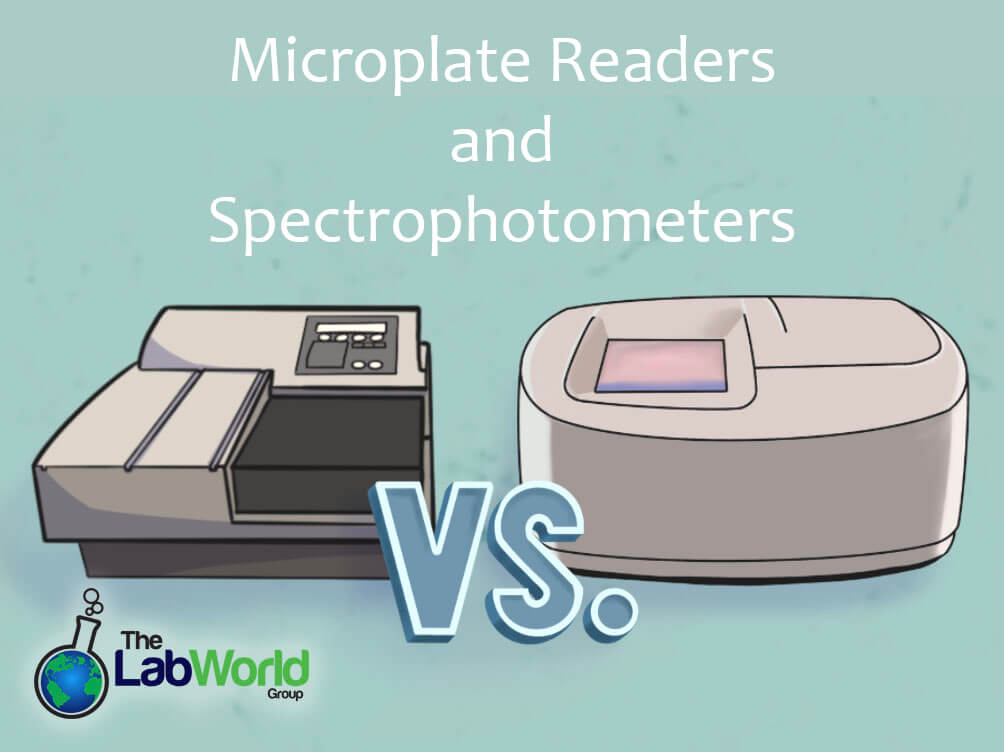
Amanda2026-01-16T15:42:49+00:00Microplate Readers, or Plate Readers, are a type of spectrophotometer. Both use either a monochromator system or filter-based optics, and these lab instruments both collect useful measurements across a variety of methods.
Between the two instruments, however, some differences set each apart.
First off…
What is spectrophotometry?
Spectrophotometry is the measurement of how much light a chemical substance absorbs. This measurement is typically related to the concentration of a targeted molecule. The light can be any wavelength from UV to NIR, achieved either with a monochromator or a filter-based selection method.
Spectrophotometry involves three main components: a light source (such as Deuterium or Tungsten, sometimes both), optics that deliver and collect the light, and a detector. These instruments can also be single- or double-beam for simultaneous measurements. Using a sample beam and a reference beam, a dual-beam system saves time by allowing the reference information to be gathered before the actual measurement.
Sample Sizes: What throughput do you need?
The biggest difference between a microplate reader and a spectrophotometer is sample size.
A typical spectrophotometer, like the Thermo Nanodrop, works with samples held in a cuvette, measuring just 1-2 uL at a time. This allows for very precise reading and a wide dynamic range. These can also be cost-effective because they’re single-purpose and have fewer components. The disadvantage is that this could limit your scope and take longer in the long run, hindering initial research potential.
A plate reader, on the other hand, works with multiwell plates to cover more ground in less time. With counts ranging from 96 to 384 wells, some microplate readers can handle up to 1536 wells, greatly expanding throughput. The main advantage of this is that it allows users to quickly narrow a field of candidate samples.
Conditions are uniform across the range of samples, making comparisons, in duplicate, quick and easy. Higher throughput can also speed up your research. Many teams begin with a microplate reader, then confirm their findings with a spectrophotometer.
Light Delivery
The other key difference between a spectrophotometer and a plate reader is how the light beams are delivered.
In the spectrophotometer, the beam passes horizontally through the cuvette. This path length is usually standardized to 1 cm. This lends itself to the higher precision you find with the spectrophotometer. This high degree of detection, however, can also yield artifacts and trace elements that can complicate readings.
In a Plate Reader, light is passed vertically through the wells. This orientation, however, creates variables that need to be accounted for. Since it’s the volume within the well that determines the pathlength, pipetting accuracy and consistency are crucial.
Plate readers, such as those offered by Molecular Devices and Biotek, use robust software to compensate for pathlength, allow you to define where the blanks in your plate are, and have settings to help keep readings uniform, such as creating a standard curve for each analyte.
Microplate readers often feature shaking settings to remove bubbles from the wells, which could alter the meniscus shape. Despite the variable that can arise, most all plate readers out there have ways to compensate and to deliver consistent and reliable results.
Final Thoughts…
Microplate readers can expand your lab’s capabilities. Particularly if you’re just beginning your research, you’re not limiting yourself too quickly. The comparative advantage of a plate reader can not only speed up your workflow but also help narrow your field of choices. Microtiter plate readers offer a broad range of reading functions and can often be upgraded, so you can go where your research takes you.
By buying a gently used microplate reader that’s been expertly serviced and certified, you can expand your reach and stretch your dollar further. The plate readers we sell at The Lab World Group are from the leading manufacturers, with top-quality components and consistent results. Each instrument also includes current validations, so you can see performance results and feel confident in your choices. If you don’t see the modes or wavelength ranges you’re looking for, let us know; we can help you find the right instrument for your needs.